
Four-year programme to strengthen financial capability, fraud prevention and livelihood resilience
MUMBAI, India and NEW DELHI, Oct. 15, 2026 -- HSBC India today announced a INR 200 crore, four-year flagship philanthropy programme to strengthen financial literacy across India. The initiative will help communities move from access to active and informed participation in the formal financial system. The programme will build the knowledge, confidence and practical skills people need to use formal and digital financial services safely, make informed decisions, protect themselves from fraud and strengthen their livelihoods and financial resilience.
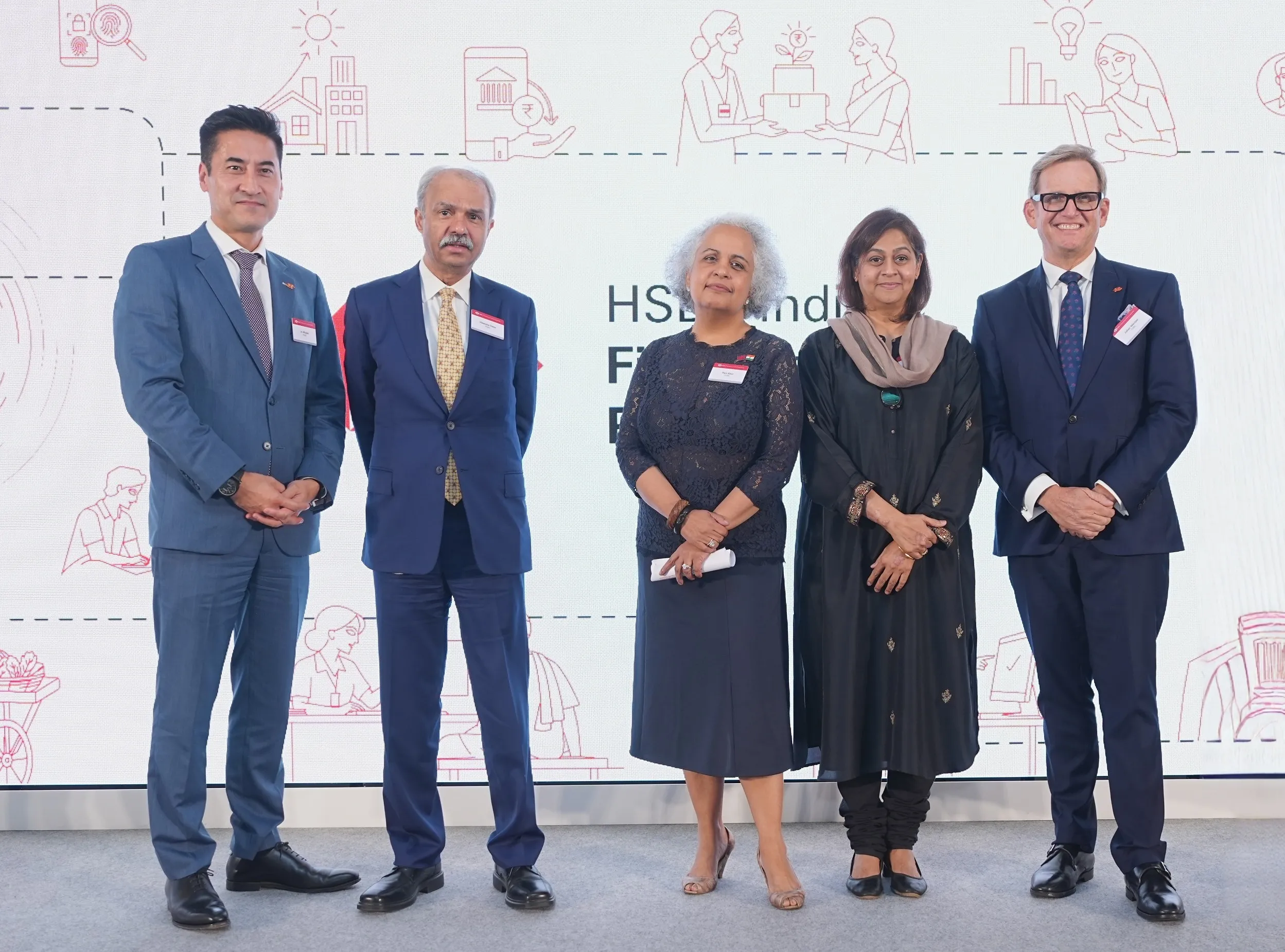
The programme was inaugurated by Pam Kaur, Group Chief Financial Officer, HSBC Holding plc together with Jo Miyake, Head-Banking, Asia and the Middle East, HSBC; Julian Wentzel, Group Chief Sustainability Officer, HSBC; Hitendra Dave, CEO, HSBC India; and Aloka Majumdar, MD, Head of Sustainability, HSBC India.
The programmme, from 2026 to 2030, will be delivered nationwide through non-profit, academic and research partners. It will focus particularly on women, youth, migrant workers, persons with disabilities, low-income households and first-time users of formal financial services. An Advisory Group of eminent professionals and sector experts will provide independent guidance, helping translate the programme's ambition into practical, scalable and measurable outcomes.
India has made significant progress in expanding financial access. There are ~60 crore Pradhan Mantri Jan-Dhan Yojana accounts that have been opened, including ~33 crore held by women**. The Reserve Bank of India's Financial Inclusion Index rose to 70 in March 2026 from 67 in March 2025*, reflecting gains across access, usage and quality. Yet, access alone is not enough, and the next phase must enable people to use financial services regularly, safely and confidently, supported by enhanced digital capability and consumer protection. HSBC India's programme responds to this need by recognising financial capability as a foundational life skill that can strengthen outcomes across education, health, livelihoods and social security.
The programme will be anchored on three pillars:
- Digital pathways to financial well-being – Enhancing adoption of technology and artificial intelligence to strengthen financial well-being of the underbanked communities. It will focus on building confidence in digital financial tools and promote their safe and responsible use.
- Financial capabilities and fraud prevention - Helping communities access and use formal financial products, make informed decisions, and identify and prevent fraud. It will address the specific risks faced by people newly entering the formal financial system or with limited digital confidence.
- Enhancing income pathways for communities – Promoting enterprise development and improve access to social protection schemes. It will help individuals and households strengthen their livelihoods, manage financial shocks and pursue more sustainable income opportunities.
Hitendra Dave, CEO, HSBC India, said, "India has built the foundations of financial inclusion at scale, but true financial well-being begins with the knowledge, confidence and practical skills to use financial services safely. The country's digital public infrastructure has enabled citizens to access formal financial systems. As digital payments expand, and new technologies transform financial services, financial literacy and protection against fraud become essential to sustaining trust. Partnerships between industry, community, organisations, and academic institutions can help extend these capabilities to underserved communities and advance the vision of Viksit Bharat."
Aloka Majumdar, MD, Head of Sustainability, HSBC India, added "First-time users of digital financial services can also be particularly vulnerable to phishing, identity theft and other forms of fraud which can cause financial loss and weaken trust in formal services. Our programme goes going beyond awareness-building to develop practical capability and safer financial behaviours, supporting the shift from financial access to lasting financial well-being."
Notes to Editor:
HSBC India and Sustainability
HSBC India's strategy to support sustainable economic growth, focuses on Community Investment (CSR interventions), Sustainable Operations, Sustainable Finance and Sustainability Risk.
The strategy is delivered through a combination of programmes, collaboration, and partnerships. We believe it requires a concerted effort between business, governments and other stakeholders on policies and programmes to support transition to a more sustainable future.
HSBC India
HSBC India offers a full range of banking and financial services through 34 branches across 22 cities. The Bank is at the forefront in arranging deals for Indian companies investing overseas and foreign investments into the country. HSBC is one of India's leading financial services groups, with over 47,000 employees in its banking, investment banking and capital markets, asset management, insurance, software development and global resourcing operations in the country. It is a leading custodian in India.
HSBC Holdings plc
HSBC Holdings plc, the parent company of HSBC, is headquartered in London. HSBC serves customers worldwide from offices in 56 countries and territories. With assets of US$3,438bn at 30 June 2026, HSBC is one of the world's largest banking and financial services organisations.
 View original content to download multimedia:https://www.prnewswire.com/in/news-releases/hsbc-india-commits-inr-200-crore-to-advance-financial-literacy-302909762.html









Comments (0)
Login to join the conversation
Login / RegisterNo comments yet. Be the first to comment!